Bengaluru’s Millionaire Boom: Can India’s Silicon Valley Sustain Its Economic Rise Amid Infrastructure and Inequality Challenges?

Bengaluru’s Millionaire Boom: Can India’s Silicon Valley Sustain Its Economic Rise Amid Infrastructure and Inequality Challenges?

Bengaluru’s millionaire population has skyrocketed by 120% in a decade, earning it the #3 spot globally for wealth growth, per Henley & Partners’ Centi-Millionaire Report 2024. Known as India’s Silicon Valley, the city hosts 13,200 millionaires with a collective ₹800 crore in investable wealth, fueling Bangalore real estate trends and cementing its role in India’s $4.19 trillion economy (IMF 2025). But crumbling infrastructure and stark wealth inequality Bangalore threaten to dim its shine. Can Bengaluru sustain its Bengaluru millionaire boom amid traffic chaos, water shortages, and a widening economic divide? This 1,200-word analysis explores the drivers of Bengaluru’s wealth surge, the Bangalore infrastructure challenges, and their impact on Bangalore real estate 2025. Dive in to discover if India economic growth in this tech hub is built to last, and share your thoughts on navigating these opportunities and risks


Bengaluru’s Meteoric Rise as a Millionaire Hub

Bengaluru’s Bengaluru millionaire growth 2025 is nothing short of remarkable. With a 120% increase in millionaires over the past decade, the city ranks third globally for wealth expansion, behind only Shenzhen and the Bay Area, per the Indian Express (2025). Home to 13,200 millionaires, including 43 centi-millionaires (individuals with $100M+ in liquid assets), Bengaluru’s collective investable wealth stands at ₹800 crore, per Henley & Partners here. The city’s tech sector, hosting unicorns like Flipkart and Byju’s, drives this surge, with 100+ startups valued over $1 billion, per Sobha.com. Venture capital inflows and a robust investment ecosystem attract high-net-worth individuals (HNWIs), bolstered by firms like Infosys and Wipro.

India’s economic backdrop amplifies Bengaluru’s appeal. As the fourth-largest economy with a $4.19 trillion GDP (IMF 2025), India saw its HNWI population grow 6% to 85,698 in 2024, with Bengaluru as a key hub, per Knight Frank’s Wealth Report 2025. The city contributes significantly to India’s 191 billionaires, with real estate tycoons like Prestige Group’s Irfan Razack shaping the skyline. In Bangalore real estate 2025, luxury home prices rose 4.1% in 2024, driven by HNWI demand in areas like Indiranagar and Whitefield, per Knight Frank. These neighborhoods, with their proximity to tech parks and cosmopolitan vibe, are millionaire magnets, offering 6-8% rental yields. Explore more in our Bangalore investment opportunities post.


Infrastructure Strain: Can Bengaluru Keep Up?

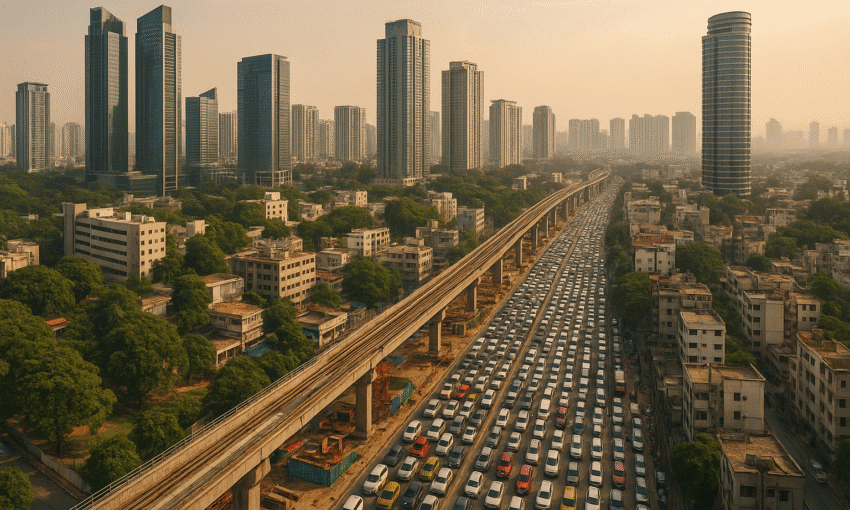
Bengaluru’s Bangalore infrastructure challenges threaten its economic ascent. The city’s 1.5 million vehicle surge over the past decade has overwhelmed roads, with Outer Ring Road congestion adding 20-30% to commute times, per BBMP reports. Water shortages, affecting 10% of gated communities in Whitefield, and sporadic power cuts frustrate residents, per Hindustan Times. Despite Namma Metro’s expansion (72 km after 18 years), Phase 3 delays until 2027 dampen investor confidence in outer suburbs like Bellandur, per Deccan Herald. These issues hit Bangalore real estate 2025, with property prices in congested areas growing 5% slower than well-connected zones, per Housing.com.  


The infrastructure impact on real estate is stark. While Indiranagar’s metro connectivity boosts property values by 10-15%, areas like Bellandur face livability concerns, deterring long-term buyers. However, solutions are emerging. BBMP’s ₹10,000 crore investment in road upgrades and smart city projects, including IoT for traffic management, aims to ease strain by 2026. Private players like Sobha are integrating sustainable designs, per Sobha.com. Yet, with 350,000 new jobs projected by 2026, can infrastructure scale fast enough to sustain the Bengaluru millionaire boom and India economic growth? Learn more in our infrastructure impact on real estate post.  


Wealth Inequality: Who Benefits from Bengaluru’s Boom?

Bengaluru’s wealth boom masks a stark divide. India’s top 1% hold 40.1% of wealth, while the bottom 50% cling to 6.5%, per the World Inequality Database (2023) here. In Bengaluru, luxury projects like Prestige Group’s ₹1.8B developments thrive, yet 74% of residents can’t afford a healthy diet, per Oxfam 2024. The impact of wealth inequality on Bangalore real estate is clear: while HNWIs snap up villas in Whitefield, affordable housing shortages push the middle class toward micro-apartments and co-living spaces, per 99acres. Rural-urban disparities exacerbate the gap, with tech wealth concentrated in urban hubs while rural Bangalore lags in basic amenities.

 
The social toll is significant. High healthcare costs drive 63 million Indians into poverty annually, and Bengaluru’s overburdened public hospitals struggle to serve the bottom 50%. Wealth inequality Bangalore risks unrest if unaddressed, per Oxfam. Policy solutions like a 2% wealth tax on the ultra-rich, as suggested by the World Inequality Lab, could fund affordable housing and rural infrastructure. Without inclusive growth, Bengaluru’s boom may benefit only the elite, undermining Can Bangalore sustain economic growth. Developers must prioritize mid-segment housing, as seen in Sobha’s sustainable projects, to bridge the gap.
Bengaluru’s Millionaire Boom: Can India’s Silicon Valley Sustain Its Economic Rise Amid Infrastructure and Inequality Challenges?

Can Bengaluru Sustain Its Economic Rise?

Bengaluru’s Bengaluru millionaire growth 2025 offers immense opportunities. The city’s 100+ unicorns in fintech, AI, and EVs, per Knight Frank, drive innovation, while Bangalore real estate 2025 yields 6-8% in Whitefield and Indiranagar. Government support, with ₹82B in FDI for green energy and infrastructure, fuels growth, per Knight Frank 2025. Bengaluru’s 150% projected rise in centi-millionaires by 2040, per Henley & Partners, positions it among global millionaire cities here 
 
Yet, challenges loom. Bangalore infrastructure challenges, like traffic and water woes, risk deterring investors, with 5% of tech firms eyeing relocation, per News18. Wealth inequality Bangalore could spark social tensions, with Oxfam warning of unrest if the top 1%’s grip tightens. To sustain growth, Bengaluru needs balanced policies: accelerate metro and road projects, mandate affordable housing, and improve healthcare access. Sobha’s smart-tech-integrated developments offer a model for inclusive urban planning. If paired with progressive taxation, Bengaluru’s Bengaluru millionaire boom can drive equitable prosperity. For more, explore our real estate trends 2025 post.


Conclusion

Bengaluru’s 120% millionaire surge cements its status as India’s Silicon Valley, powering India’s $4.19 trillion economy with tech innovation and real estate growth. Yet, Bangalore infrastructure challenges—traffic, water shortages, and slow metro progress—threaten livability and investor confidence. Wealth inequality Bangalore, with the top 1% holding 40.1% of wealth, risks alienating the majority, fueling demand for inclusive policies. While Bangalore real estate 2025 offers 6-8% yields and tech-driven opportunities, unchecked disparities and infrastructure gaps could derail progress. Investors and homebuyers should seize Bengaluru’s potential but advocate for sustainable urban planning and equitable growth. Is Bengaluru’s Bengaluru millionaire boom a golden opportunity or a ticking time bomb? Comment your thoughts and subscribe for more insights on Bangalore real estate trends!

Listifyi